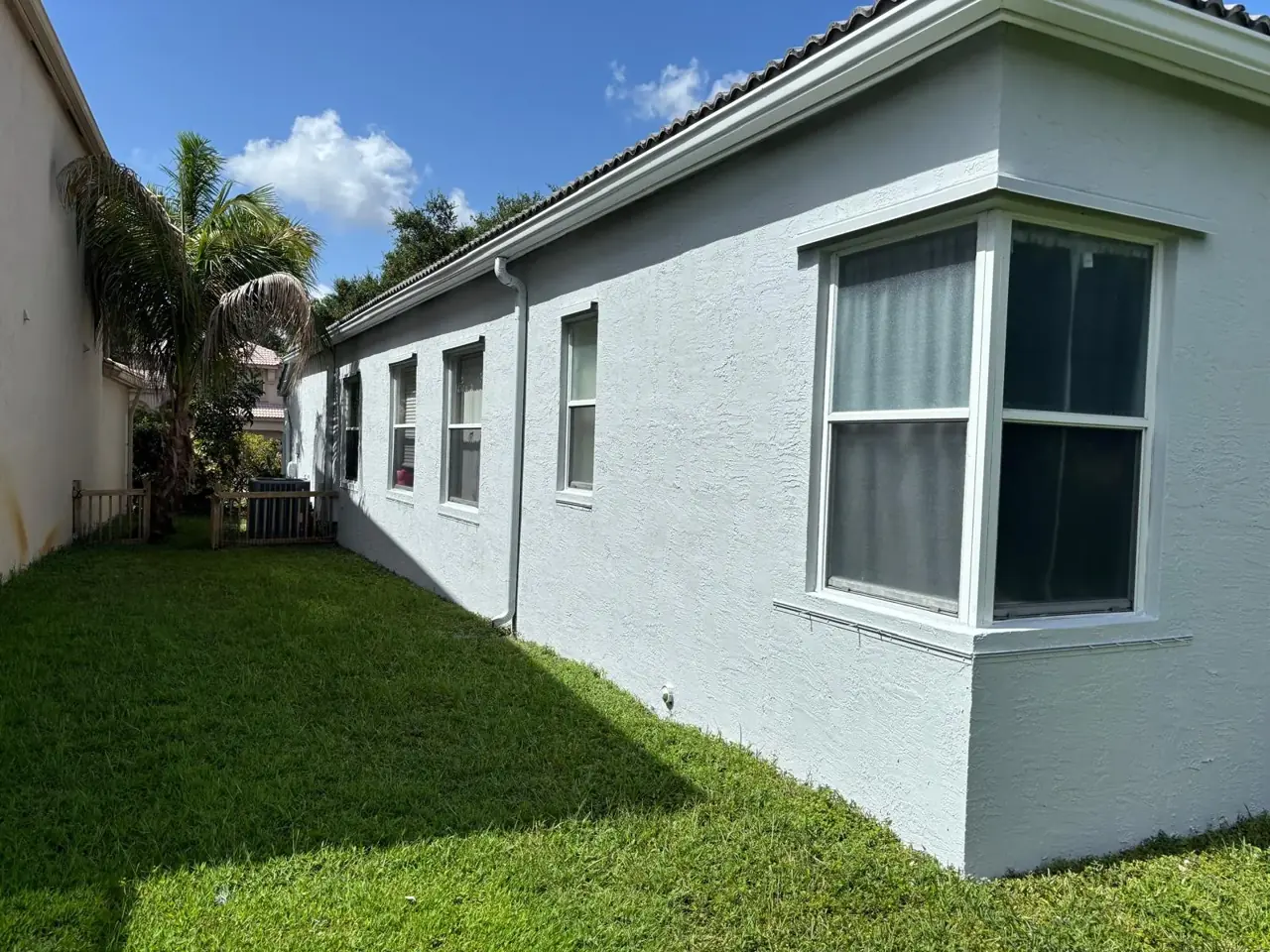
How much does it cost to paint a house exterior in South Florida?
Every home is different, so we quote in writing after a free walkthrough, never a surprise number later. Price depends on square footage, stories, how much prep the stucco or siding needs, and the coating system. New customers currently get 20% off, and the estimate is always free.
How often should I repaint my house in Florida?
In South Florida's sun, humidity and salt air, most stucco homes need repainting every 7–10 years, sooner near the coast or if the last job skipped proper prep. Fading, chalking or hairline cracks are the signs it's time.
What's the best time of year to paint an exterior in Florida?
We paint year-round. In summer we plan around afternoon storms and paint in the morning; winter's dry season is ideal. Modern coatings cure fast, so a passing shower after the recoat window isn't a problem.
What does your exterior process look like?
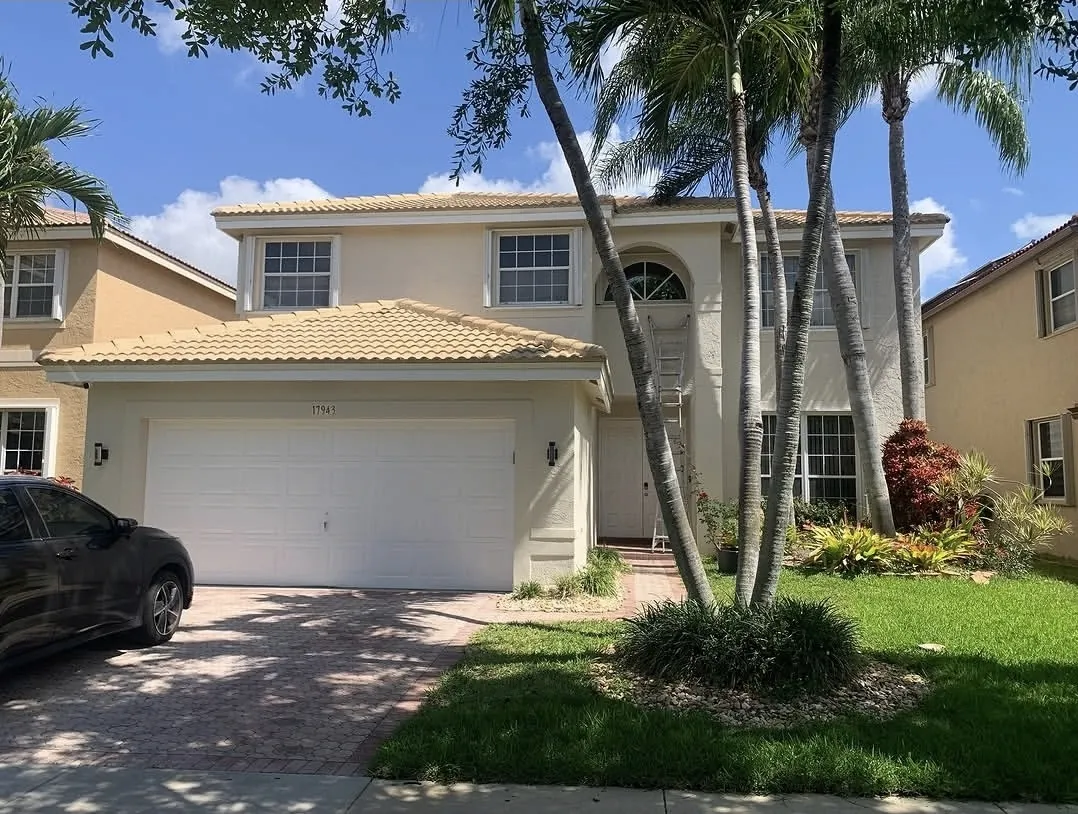
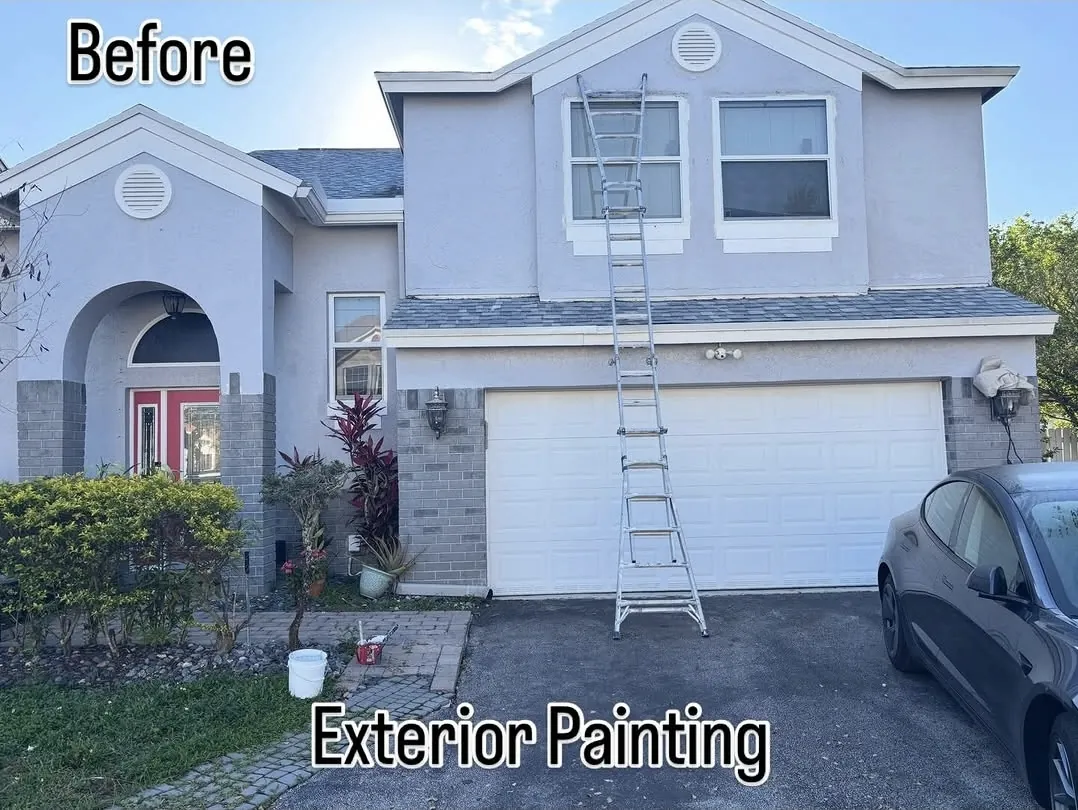
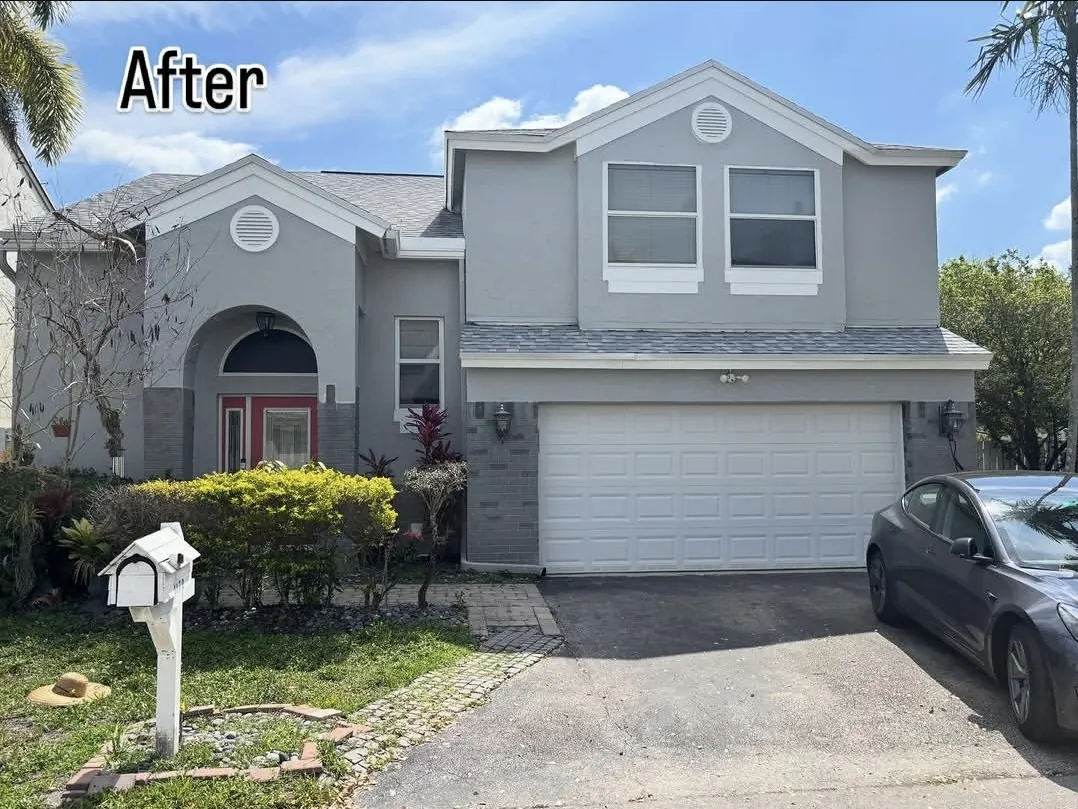
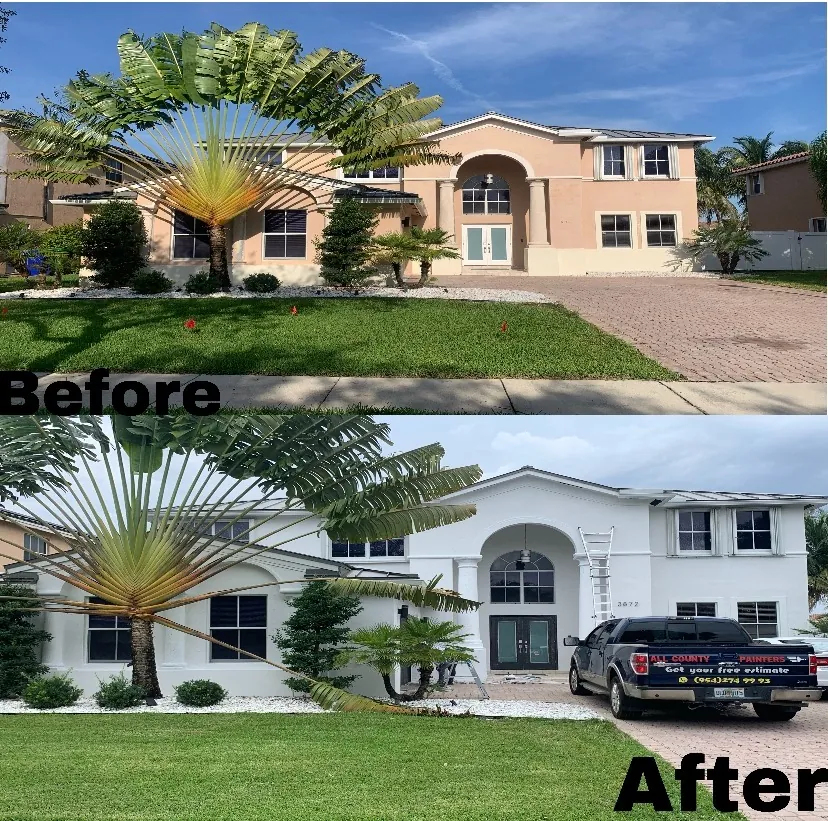
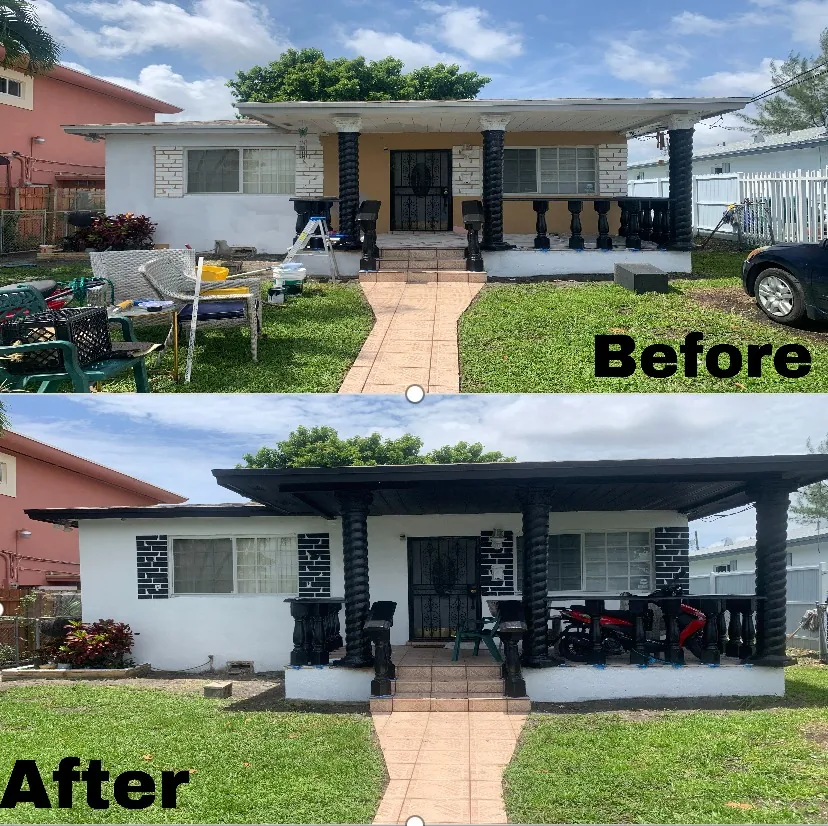
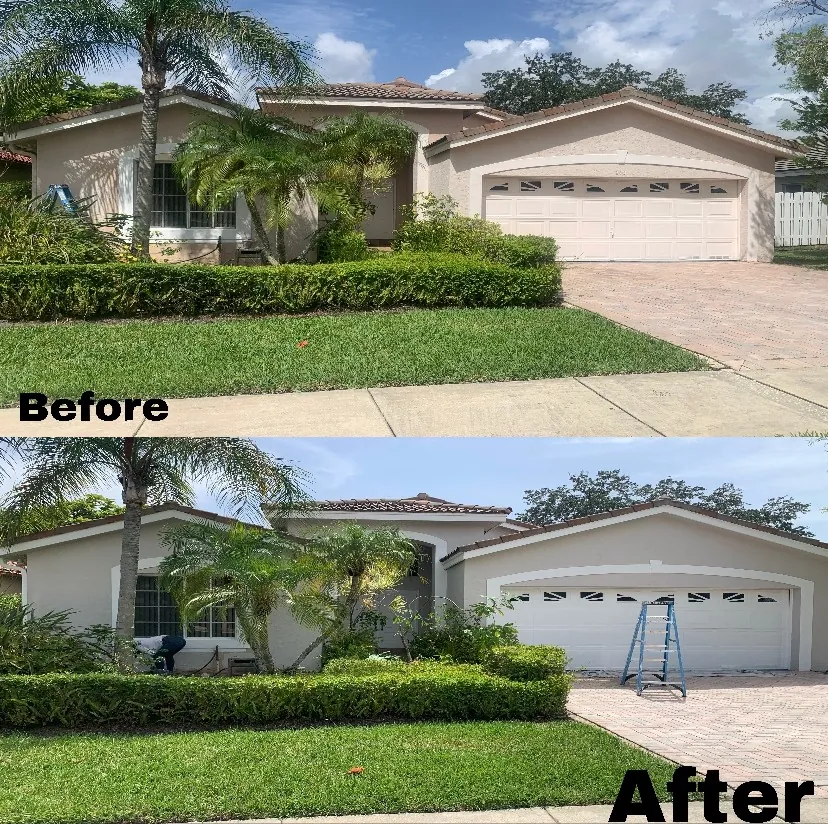
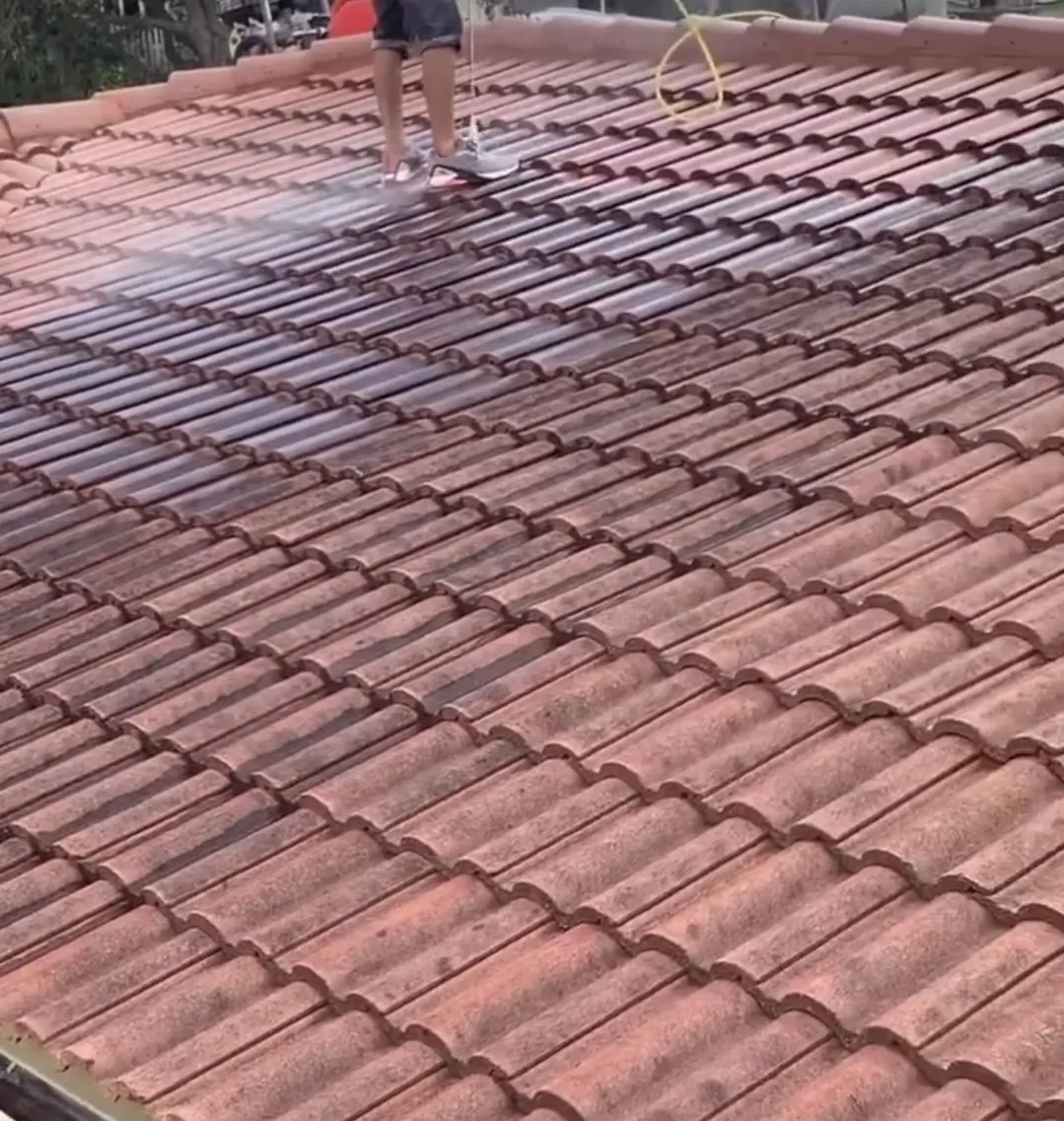
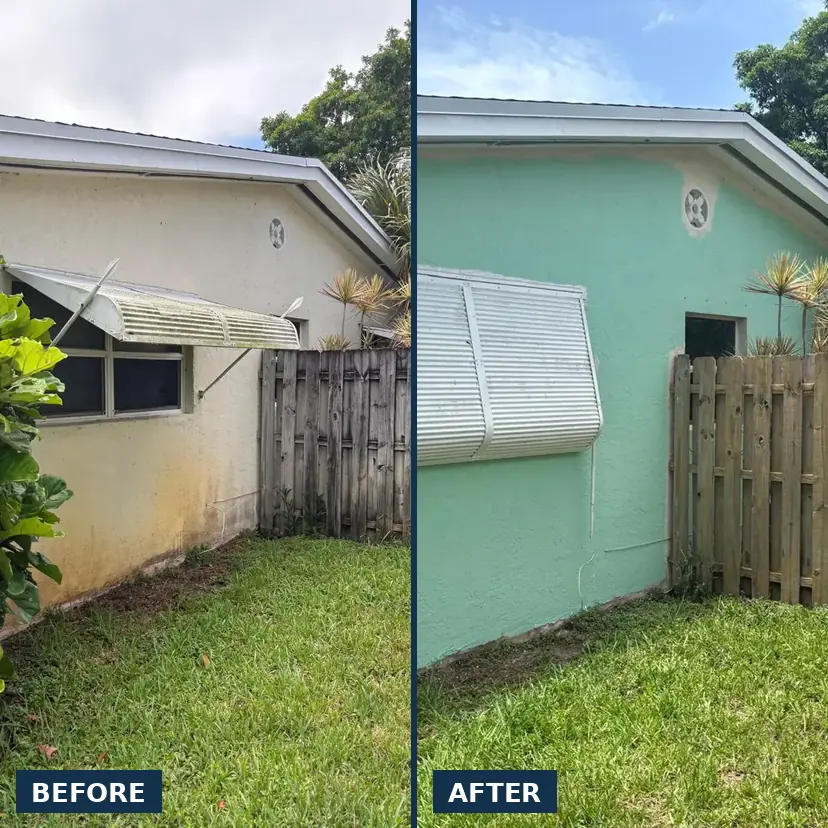
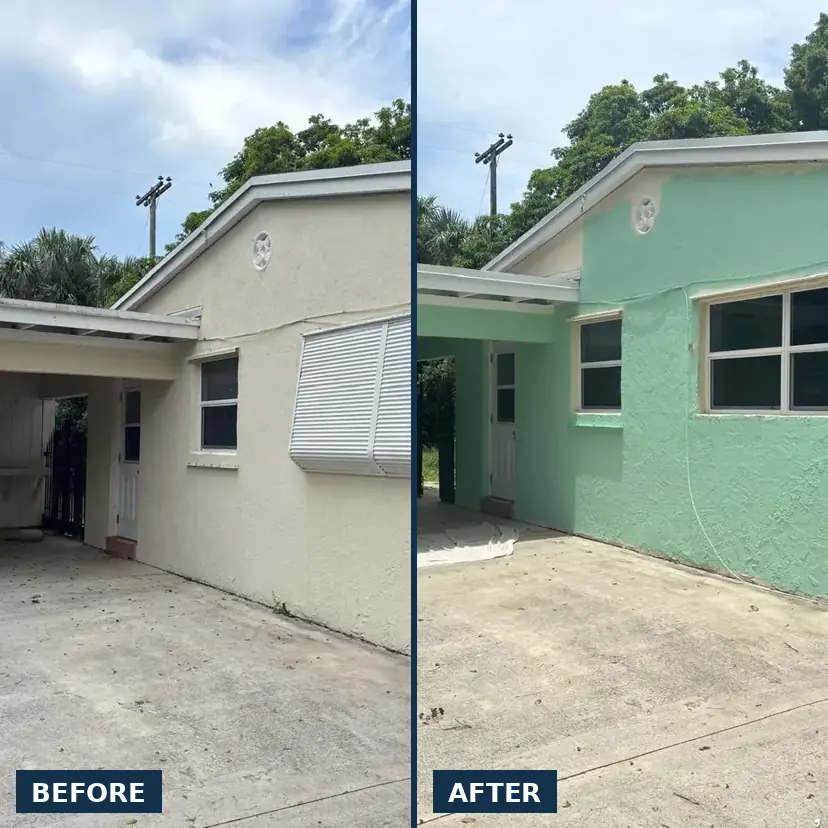
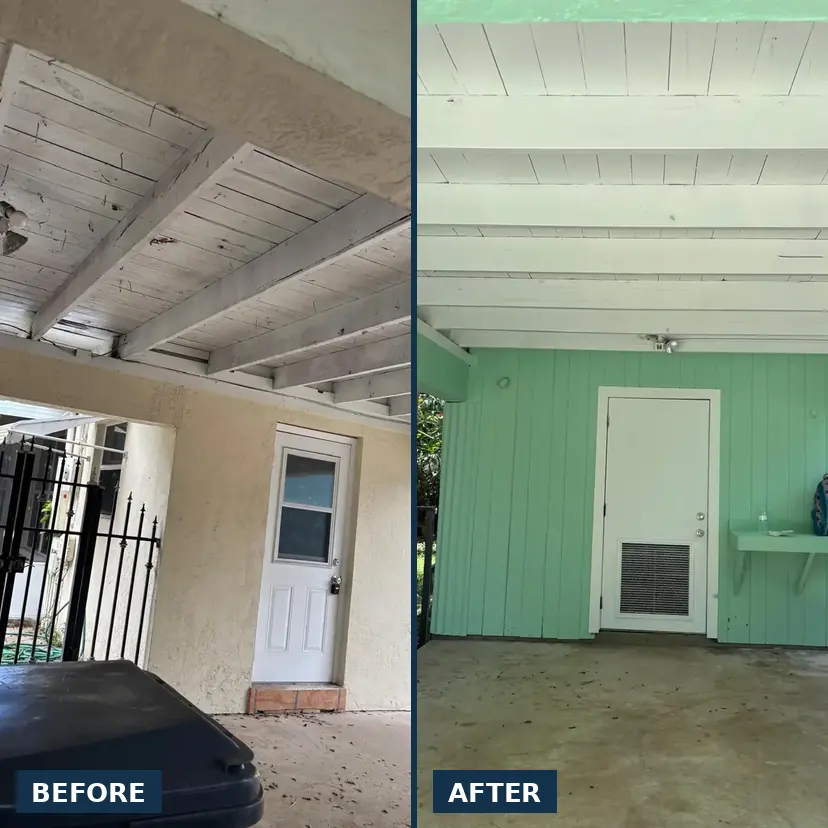
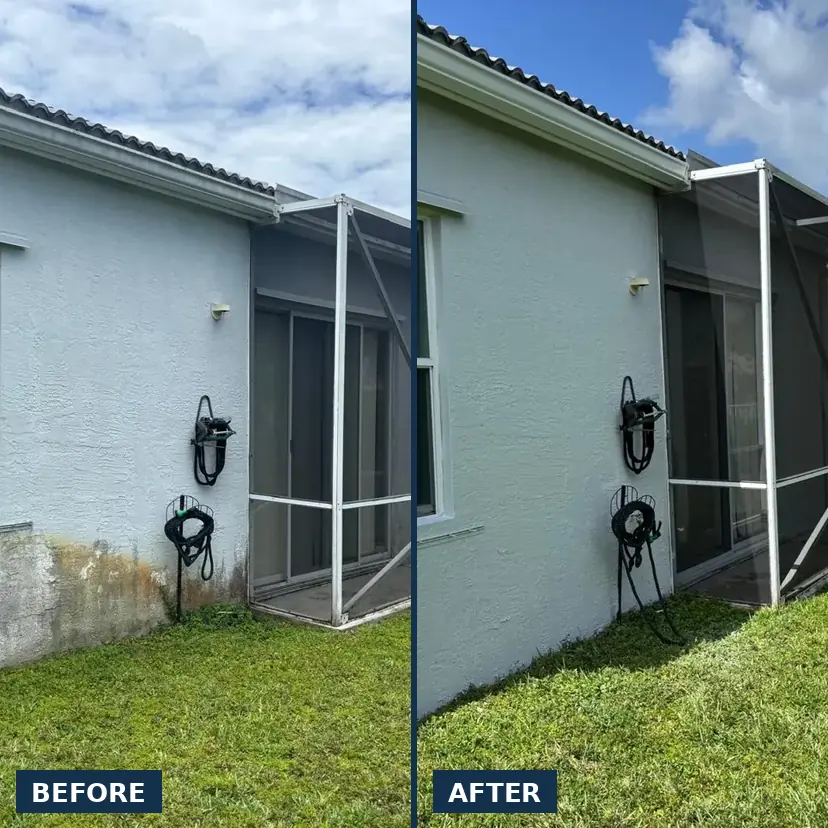
Pressure wash first: paint over dirt fails. Then we seal cracks, caulk gaps, prime bare spots, and apply two coats of a weather-resistant system rated for Florida UV and moisture. We protect landscaping, driveways and screens throughout.
Do you paint stucco, siding and fences?
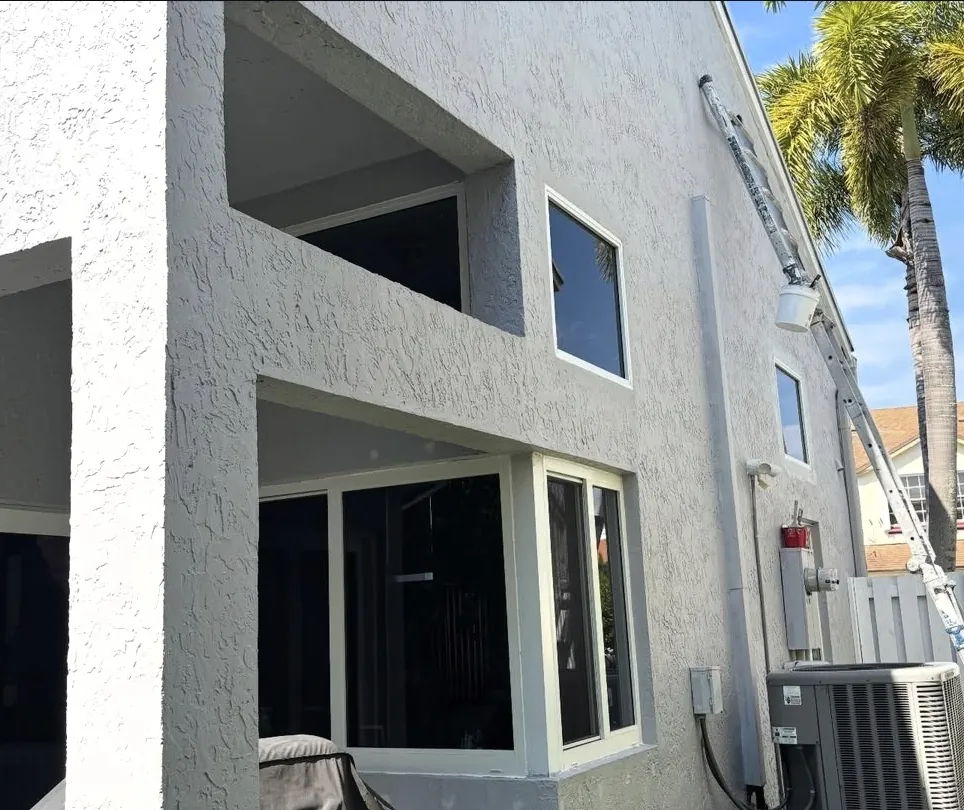
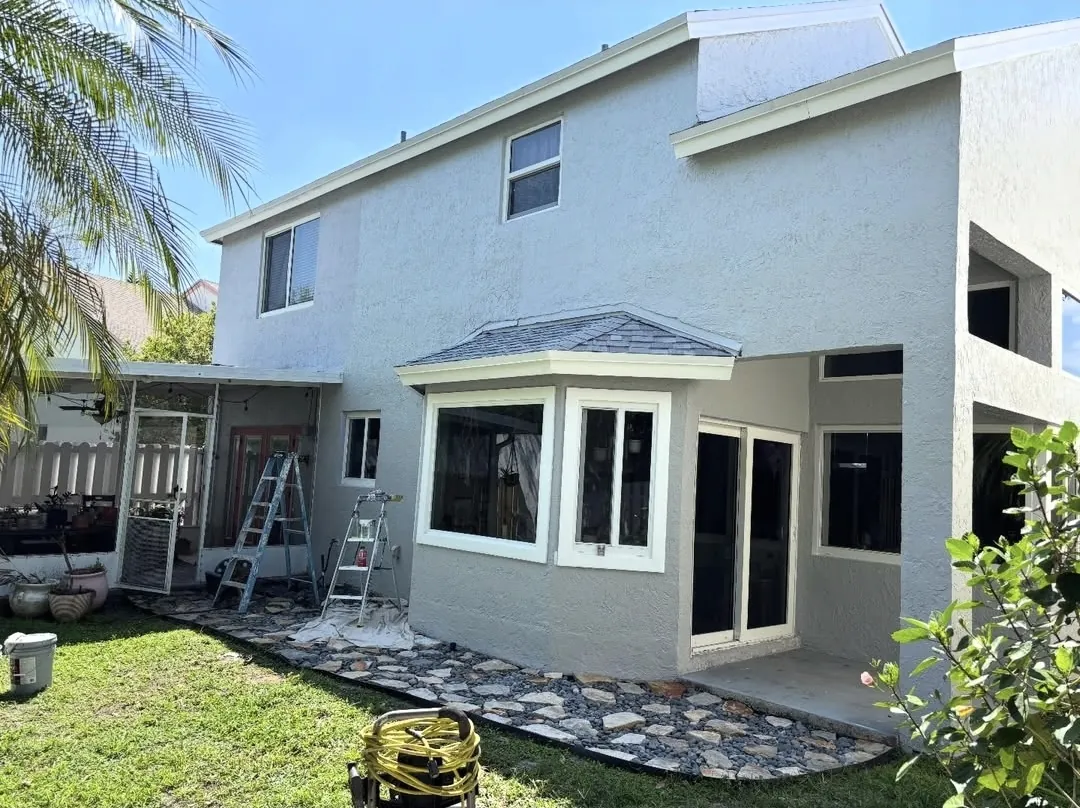
Yes. Stucco is our bread and butter, plus siding, wood and metal fences, doors, trim, and waterproofing for balconies and terraces.
How long does new stucco need to cure before painting?
The paint makers don't agree on one number. Behr says a full 30 days for new stucco, Benjamin Moore says at least 60 days, and Sherwin-Williams says fresh stucco takes about 30 days to drop from a pH of 13 to 14 to around 9. After larger crack repairs on old stucco, Benjamin Moore says to wait seven to 10 days before painting. Paint too soon and the new coat can blister, peel and burn.
Is elastomeric paint worth it on stucco?
On stucco with hairline cracking, often yes. Elastomeric goes on far thicker than standard paint, with Behr's built to a final dry film of about 10 to 15 mils, and it stays flexible, so it bridges hairline cracks instead of cracking over them. It costs more and isn't necessary on every house, so we recommend it based on your walls rather than as a default.
Are you insured?
Yes: All County Painters is fully insured, and every exterior comes with a written workmanship warranty. You deal directly with the owner, Alejandro, from estimate to final walkthrough.