Limewash has been on walls for thousands of years, which is a strange thing to say about a finish that feels brand new on Instagram. The Romans used it. So did every Mediterranean village whose photos you have saved. What changed is not the material. What changed is that people got tired of flat, plastic-looking walls.
What limewash actually is
Limewash starts as limestone. The stone is fired, then slaked with water, which turns it into a lime putty. That putty is aged, thinned with water, and tinted with mineral pigments. That is the whole recipe. No plastics, no solvents, nothing synthetic.
The interesting part is what happens on the wall. Regular paint dries into a film that sits on top of the surface, like a skin. Limewash does something different: it absorbs carbon dioxide out of the air and turns back into crystalline limestone, bonding into the surface rather than sitting on it. The finish is not a coating on your wall so much as a thin layer of stone that grew there.
That single difference explains almost everything else about it.
Why it looks like that
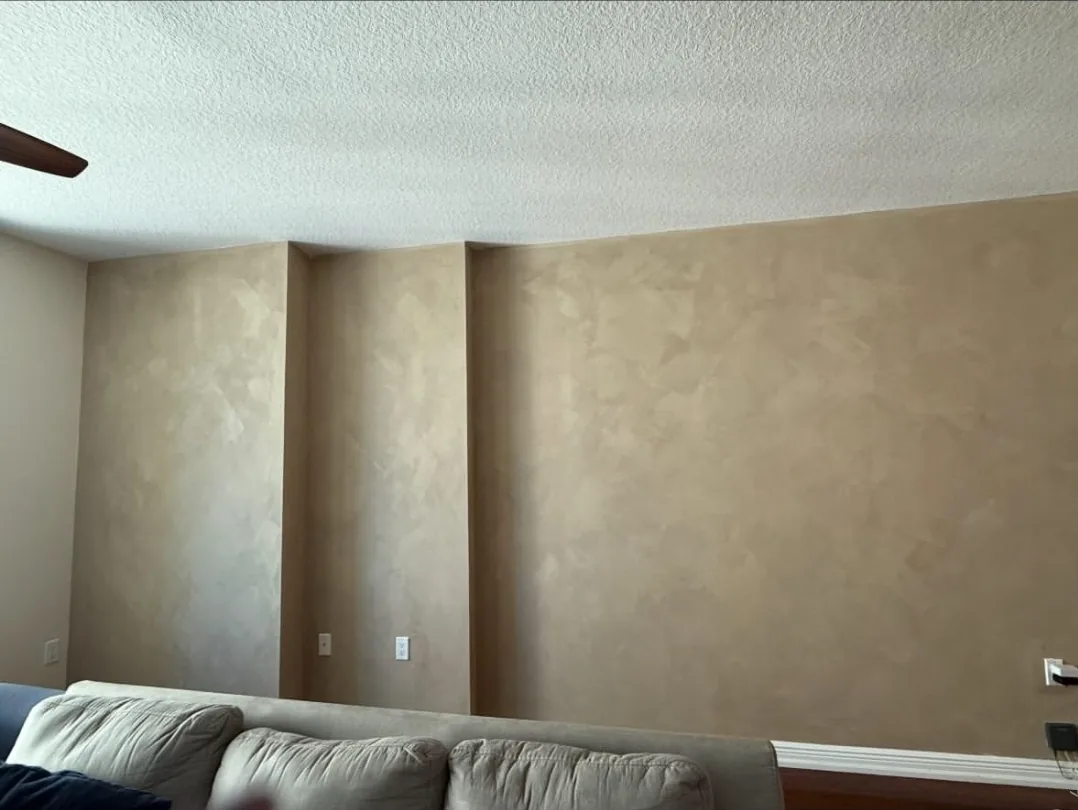
The cloudy, shifting depth people recognize comes from two things. The first is that limewash is translucent and applied thin, so each coat lets a little of the one beneath show through. The second is the brush. Limewash is laid on in overlapping cross-hatched strokes, not rolled, and those strokes are what create the movement. Two painters will produce two slightly different walls from the same bucket.
It is also why limewash cannot really be faked. There are paints sold to imitate the look, and applied well they can be attractive, but they are still a film with texture printed into it. They do not shift with the light the same way, because there is nothing underneath to shift.
Limewash is crushed limestone and water, brushed on thin, that chemically becomes stone again as it cures. The look comes from translucency and brushwork, not from texture added to a paint.
What it does in a Florida house
Two properties matter here more than they would in a dry climate.
It breathes. Because limewash is porous rather than a sealed film, moisture inside a wall can pass through and evaporate instead of building up behind the finish. In a state where interior humidity is a constant and blistered paint is a familiar sight, a breathable finish is not a marketing line. It is the reason limewash has survived on old masonry buildings for centuries.
It resists mold while it is fresh. New limewash is strongly alkaline, and mold and bacteria struggle to establish themselves on a surface that alkaline. The maker Romabio is clear that this fades: once the pH is neutralized over time, the finish loses its ability to ward off microorganisms. What lasts is breathability, which lets a wall dry out. Our comparison of limewash vs. paint covers what the research says about mold.
One honest caveat, because it gets oversold: limewash resists mold, it does not remove it. If a wall already has mold on it, that has to be cleaned and the cause dealt with first. Limewash applied over existing growth just covers a problem that is still there.
Where it works, and where it doesn't
Limewash is happiest on porous surfaces. Brick, stone, stucco and raw plaster take it beautifully. Bare brick and stone often need nothing more than a mist of water first; stucco usually needs a primer, which the outdoor section below explains.
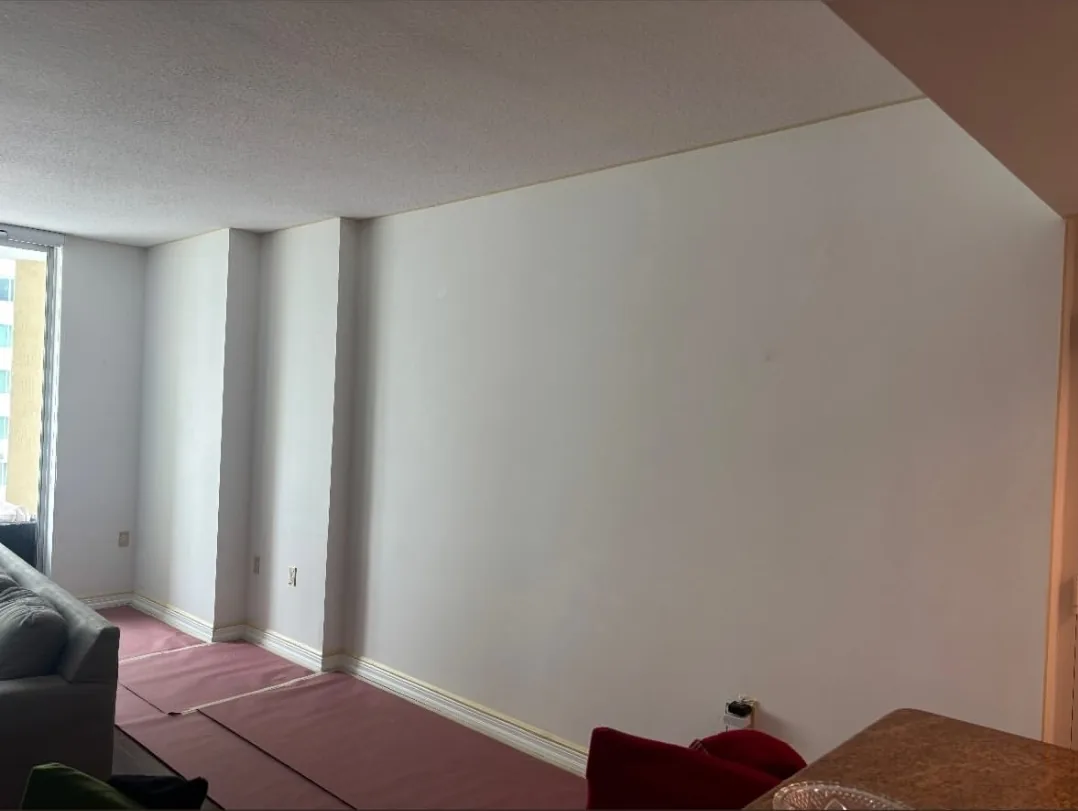
Modern drywall and previously painted walls are the opposite: smooth, sealed, and non-absorbent. Limewash needs a uniform rate of suction to cure evenly, so on a slick surface it goes patchy and streaky. Those walls need a mineral primer or base coat first, and skipping that step is the single most common reason a limewash job looks wrong.
It is also not waterproof. Limewash belongs on bathroom walls, not inside a shower, and not as a splash-back behind a sink.
- Excellent: feature walls, living areas, bedrooms, entries, fireplaces, exterior brick and stucco
- Fine with the right prep: drywall and previously painted walls, over a mineral base coat
- Not the right choice: shower interiors, splash zones, surfaces in constant contact with water
Limewash on a South Florida exterior
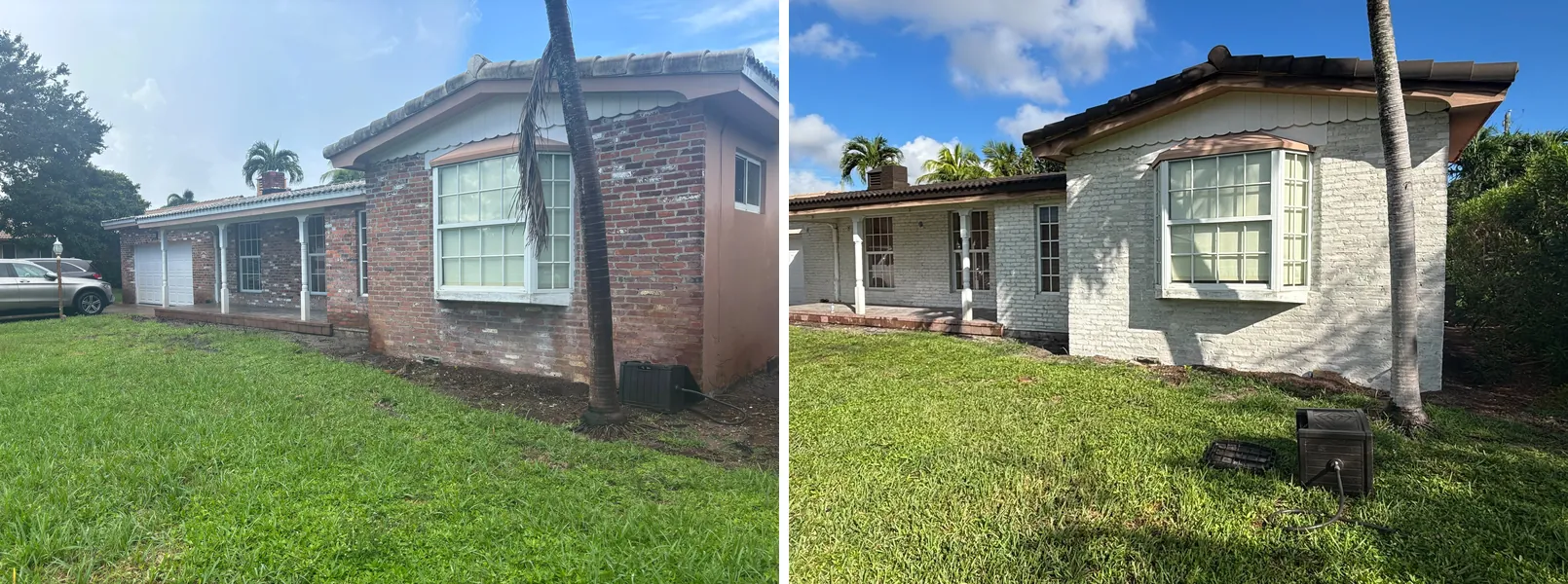
Limewash works outside too, on brick ranch homes, on stucco, and on houses that were painted years ago. Two limewash makers publish detailed instructions, Romabio in its Classico Limewash technical data sheet and Portola Paints in its Lime Wash technical data sheet. They agree on most of it, and the details matter more outside than in.
Bare brick and stone
This is the easy case. Romabio says its limewash can go straight onto unpainted, unsealed, absorbent brick and stone with no primer, and it suggests a simple test: wet the surface and see whether it soaks the water in. If it does not, a primer is needed. Portola says raw masonry does not need its undercoat. The surface still has to be clean, sound and free of efflorescence, the white salt bloom brick can carry.
Stucco, painted or not
Stucco is where the makers are stricter. Romabio lists painted and unpainted stucco among the surfaces that require at least one coat of its mineral primer before the limewash goes on. For painted walls, Portola says to dull any sheen first: sand lightly, clean off the residue, and prime with its undercoat, two coats over semi-gloss. In other words, limewash on a painted stucco house is a primer job first. Brushed straight over old paint, it has nothing to grip.
New stucco needs to wait. Romabio says not to apply limewash over new cement stucco until it has cured for 30 days, or until an alkalinity test shows it is ready.
Sun, heat and afternoon storms
Romabio gives a working range of 50°F to 88°F for both the air and the wall, humidity under 80 percent, and no application in direct sun. When the wall itself is above 80°F, it says to wet it down to cool it first. It also says not to limewash an exterior when severe thunderstorms or showers could hit during the 12 to 24 hours the finish needs to dry. Portola sets its floor at 55°F and also rules out direct sun and extreme heat.
On a South Florida summer afternoon, that rules out a lot. It is the same reason the dry months are the easier time for any exterior work, which our guide to the best time of year to paint a house exterior in South Florida lays out month by month. Even after it dries, limewash keeps hardening: Romabio puts full cure at up to 20 to 25 days in mild weather.
Where water hits the wall
Romabio says limewash should not go on steps, ledges or other horizontal surfaces where water sits. It also warns that sprinklers and splash-back from wet soil can stain the bottom of a wall over time, and it recommends a clear protective topcoat on the lowest 3 feet and anywhere water runs often. If your yard has sprinklers, plan for that before the first coat.
Bare brick and stone can take limewash directly. Stucco, painted or not, needs a primer first. Pick a dry, mild stretch without afternoon storms, keep it out of the midday sun, and plan for sprinkler spray at the base of the wall. If you want it done for you, see our limewash painting service in South Florida.
How the job actually goes
Most walls take two coats, and the first needs several hours to dry before the second goes on. A third coat adds depth if you want more drama. Because each coat is thin and translucent, the finish builds gradually, and this is the part people find hardest to trust: after one coat it usually looks patchy and wrong. That is normal. The wall is not finished until it is finished.
Limewash also ages differently. It does not peel off in sheets the way a failed paint film does. It patinas, softening over years, and it can be repainted or refreshed later without stripping anything.
Is it right for your house?
Limewash suits people who want a wall with depth and are comfortable with a finish that is not perfectly uniform. If you want a flat, even, exactly-repeatable color, regular paint is genuinely the better answer and we will tell you so.
It is also worth being realistic about where to start. Most of our limewash clients begin with one feature wall rather than a whole house, live with it for a while, and go from there.
Thinking about a limewash wall?
We will look at the surface, tell you honestly whether it suits limewash, and quote it in writing.
Get a Free Estimate 💬 WhatsApp Us