High gloss and lacquered walls have moved out of the design magazines and into real requests. We hear about them in Boca Raton more than anywhere else we paint, usually for a dining room, a powder room, or a dark hallway somebody wants to feel deeper than it is. The finish is worth wanting. What almost nobody explains is that the shine is the last two days of the work, and everything that decides how it turns out happened before that.
Here is the sentence that reframes the whole project: a glossy wall is a flat wall with paint on it. The paint is not what makes it look expensive. Flatness is.
Two different things, and most people want the first one
"Lacquered walls" and "high gloss walls" get used as though they mean the same thing. They do not, and the difference changes the budget, the schedule and whether the wall can ever be repaired.
High gloss paint is paint. Modern high gloss wall paints are usually alkyd or waterborne alkyd. They level out as they dry and they go on with a brush, a roller or a sprayer like any other coating. Fine Paints of Europe's Hollandlac Brilliant, one of the products most often specified for this look, measures about 98 gloss units at 85 degrees, which is close to as reflective as a paint film gets.
True lacquer is a process, not a product choice. It is sprayed in thin coats, sanded between them, and built up over many passes until the surface reads like glass. Livingetc, reporting on the trend, describes a real lacquered wall as seven to twelve coats of paint and polish. That is specialty finishing work, closer to what happens in a furniture shop than to painting a room, and it is scheduled and priced accordingly.
When somebody sends us a photo of a lacquered dining room, they almost always want high gloss paint. It gets most of the way to the same look on a normal schedule, and it can be touched up later. Real lacquer cannot be spot repaired. A scuff means refinishing the wall.
The industry already wrote this down
This next part is not our opinion. It is in the document the drywall trade uses to define how finished a wall is.
GA-214, Recommended Levels of Gypsum Board Finish, published by the Gypsum Association, sorts drywall into levels 0 through 5. Level 4 is what a normal, well-built room gets: joints taped and coated, fasteners covered, everything sanded. Of that level, the standard says plainly that "gloss, semi-gloss, and enamel paints are not recommended over this level of finish."
Not "may show some imperfections." Not recommended.
The level that is rated for gloss is level 5, and the standard defines it by one extra step: "a thin skim coat of joint compound, or a material manufactured especially for this purpose, shall be applied to the entire surface." Level 5, it says, is highly recommended where gloss, semi-gloss or enamel paints are specified, or where severe lighting conditions occur.
That one line is where the money in this job actually sits. The glossy room in the photograph is a level 5 wall, and that step is what most quotes for a gloss accent wall quietly leave out.
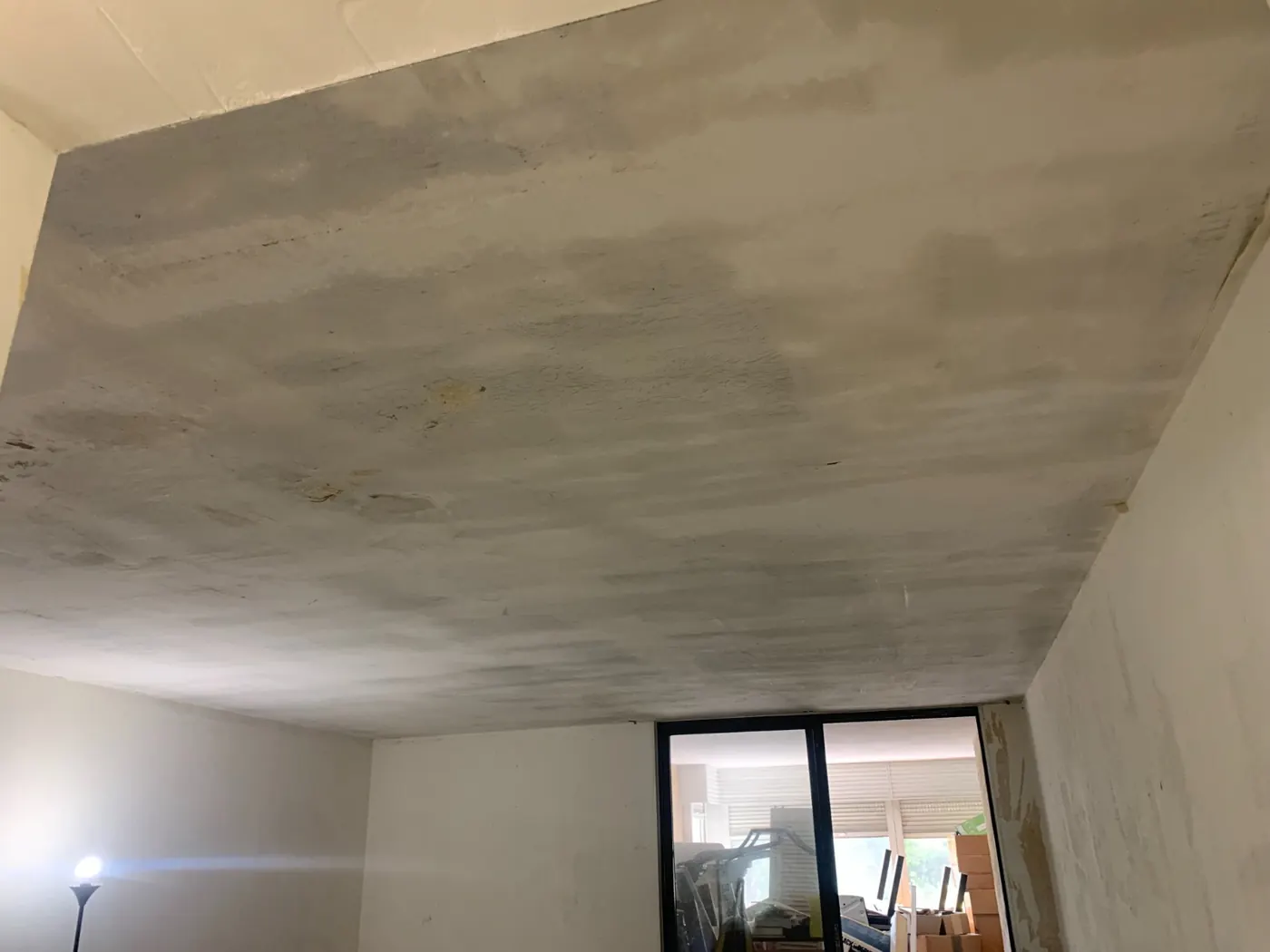
Gloss magnifies instead of hiding, so the trade's own standard puts gloss paints at level 5: a skim coat across the entire wall, not patches on the bad spots. The preparation is the job.
Why the sheen does that
A flat surface scatters light in every direction, so a shallow dent sends back about the same brightness as the wall beside it and your eye reads one plane. A glossy surface reflects light at an angle instead, so every deviation in that plane throws light somewhere different. The dent stops being a dent and becomes a dark line.
Paint manufacturers are direct about this. Sherwin-Williams describes flat as "great for hiding surface imperfections" and high gloss as "the most reflective option," which "can create a high glare." The surfaces their own guide recommends for high gloss are trim, doors, windows and cabinets. Walls are not on the list. Fine Paints of Europe, the company that makes the gloss everybody wants, points its customers toward a matte acrylic for interior walls.
That is worth sitting with. The companies selling high gloss are the ones telling you walls are the hard case.
On a wall you already own, the things that come forward are the ones nobody notices today: tape lines at the seams, every screw, old patches, and roller stipple from whoever painted last. If a previous painter rolled the room with a heavy nap, that texture is now permanent unless it is skimmed off, and gloss will find it the first evening a lamp is on.
Interior designer Courtney Sempliner, quoted in the same Livingetc piece, puts it this way: "it's best to apply lacquer over new walls or millwork. If there are any imperfections in the walls, the lacquer will draw attention to them." We agree, with one correction. New construction is not automatically ready either, because new walls are normally finished to level 4 as well.
The Florida part the design articles leave out
Two things change here that would not matter in a dry climate.
The application window is narrow, and our air sits at the edge of it. Hollandlac Brilliant's own technical data sheet gives a range of 45 to 77 degrees Fahrenheit for both the air and the wall itself, at a maximum of 85 percent relative humidity. Those are ordinary limits for an alkyd. What is not ordinary is where we work: the Florida Climate Center, using National Centers for Environmental Information records going back 71 years, puts average morning relative humidity at 82 percent across the year, rising to 86 percent in September. Those readings are from Miami and West Palm Beach, the two long-record stations that bracket Boca Raton.
That does not mean you cannot put a gloss wall in a Florida house. It means the room has to be closed up and conditioned for the whole job, and the wall itself has to be at temperature, not just the air around it. Gloss that skins over in warm humid air instead of leveling out is the difference between a mirror and an orange peel, and you cannot fix it afterward.
Alkyd yellows, and gloss is usually alkyd. Behr's own troubleshooting guidance says it directly: "alkyd paints, because of their curing mechanism, do tend to yellow, particularly in areas that are protected from sunlight." That is worst in exactly the places people want gloss, which is closets, windowless hallways and the wall behind a large piece of art. On a white or pale gloss wall the shift shows. A waterborne alkyd holds its color much better and is the safer specification for a pale room. In the deep greens and blues where most of this trend lives, it matters far less.
How the job actually goes
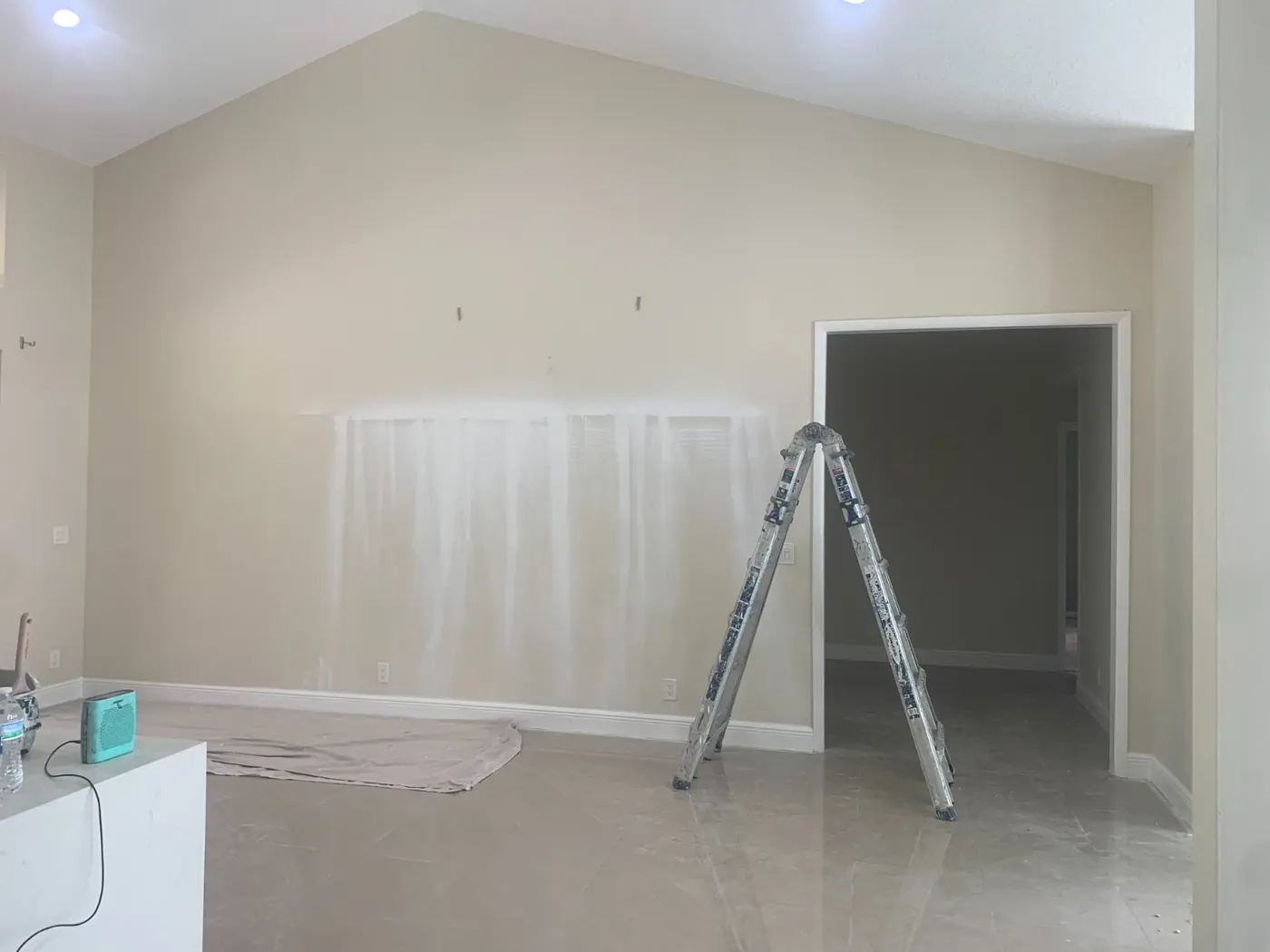
It is five steps, and only the last one involves the color anybody picked.
- Light the wall first. A work light held almost flat against the surface throws a shadow off every defect on it. Ten minutes with that light is what decides the scope, and it is the only honest way to quote the room.
- Repair, then skim the whole surface. Not the bad spots. Islands of compound have a different flatness and a different porosity from the wall around them, and gloss finds the boundary every time.
- Sand, then light it again. Anything still casting a shadow gets another pass now, because after the finish coats it is too late.
- Prime the whole wall evenly. Gloss over uneven suction dries to uneven sheen, which looks like a stain rather than a defect and is just as obvious.
- Finish coats, room closed and conditioned, drying time respected. Hollandlac Brilliant is recoatable after roughly 18 hours. That is not a number to argue with on a Saturday.
When we will tell you not to do it
We would rather lose the job than hand back a wall that shows every mistake in it, so there are four situations where we say no or suggest something else.
- Textured walls. Knockdown and orange peel under gloss reads as shiny texture, not as a lacquered wall. Either it gets skimmed flat first or the finish should change.
- A room lit hard from one side. A big window or a wall washer aimed down the surface is the worst case there is for gloss. Satin or eggshell gets most of the depth with a fraction of the risk.
- A rental, or a room being remodeled in a couple of years. The preparation is the expense here, and it does not travel with you.
- A wall with an active moisture problem. Gloss is a tighter film than flat paint, and a wall that is still wet behind will push it off. The water gets found first, or nothing else is worth doing.
And if what you actually want is depth rather than shine, the other end of the same shelf is worth a look. Limewash gives a wall movement and character, and it asks almost nothing of the surface underneath.
Thinking about a gloss wall?
We will put a light on the wall, tell you honestly what it would take to get it flat, and quote the whole thing in writing.
Get a Free Estimate 💬 WhatsApp Us