In a mild climate, a good exterior paint job is often quoted at seven to ten years. Florida is not a mild climate. Most homes here need repainting sooner, and homes near the water sooner still.
The ranges below are what the industry generally reports, and they match what we see on job sites across Broward. Treat them as a starting point, then look at your actual walls, because condition beats the calendar every time.
Realistic timelines by surface
- Stucco and concrete block: commonly seven to ten years when the prep and coatings were right. Many Florida homes land closer to five to seven in practice.
- Wood siding and trim: four to six years. Wood is porous, absorbs moisture, and is the first thing to fail on most houses.
- Fiber cement: seven to ten years with a quality topcoat.
- Wood fences and gates: three to five years. They take ground moisture and full sun with no overhang protecting them.
- Coastal homes: subtract a year or two from any of the above. Homes within about a mile of the ocean often see paint degrade in three to five years.
Why Florida is harder on paint
Ultraviolet light
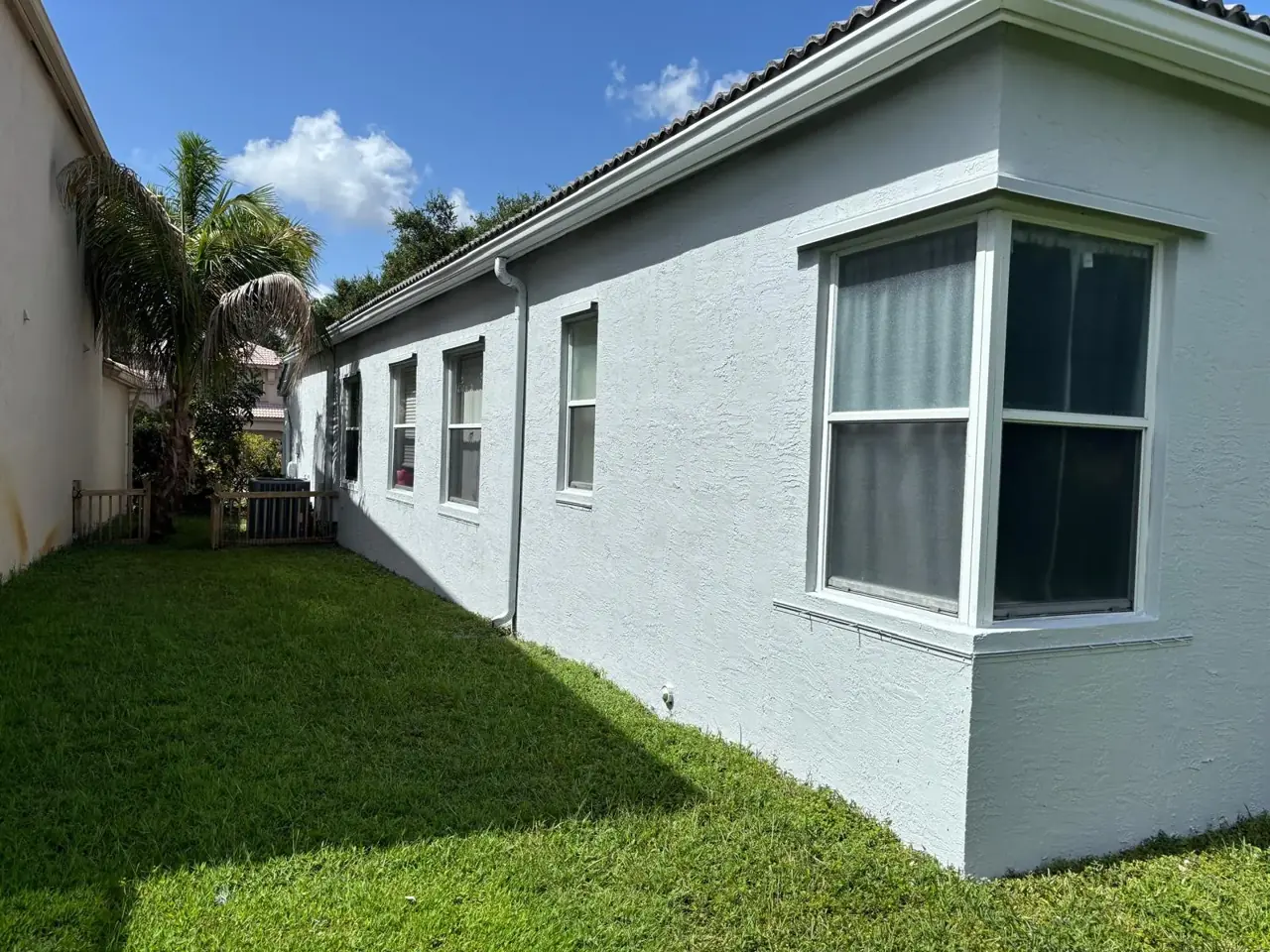
UV breaks down the binders holding paint together. That shows up first as fading, then as chalking, a powdery residue that comes off on your hand. South and west-facing walls take the worst of it, and dark colors fade years before pale ones on the same house. If one wall looks older than the rest, this is usually why.
Humidity
When moisture gets trapped behind a coating, it pushes outward as the wall heats. That pressure lifts the paint into blisters, which pop and peel. High humidity also slows fresh paint from curing properly, which is why a job rushed in the wrong conditions starts failing early.
Salt air
Salt is hygroscopic, meaning it pulls moisture out of the air, and it settles into the pores and hairline cracks of stucco. It also blocks new paint from bonding. A coastal home needs a genuine salt-neutralizing wash before painting, not just a rinse.
The signs that matter more than the date
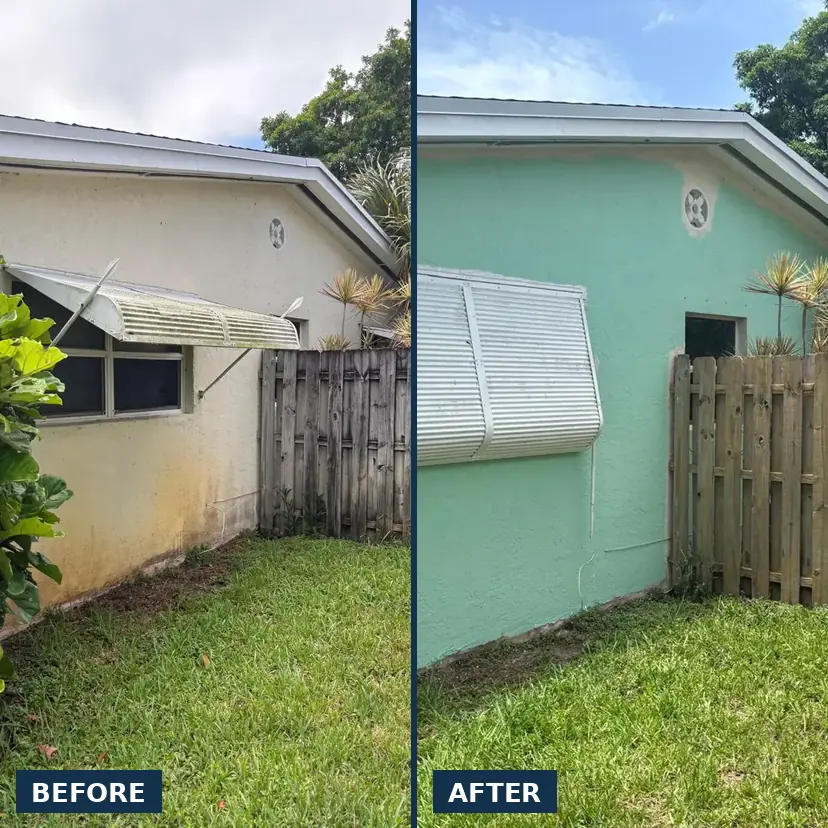
Run your hand across a sunny wall. If it comes back powdery, that is chalking, and it means the binder is breaking down.
- Chalking: white powder transfers to your hand
- Uneven fading: one elevation noticeably lighter than the others
- Hairline cracks multiplying across flat stucco areas or near openings
- Blistering or peeling, which means water is already getting behind the coating
- Failed caulk at windows, doors and trim joints
- Mildew that no longer washes off, or comes straight back
- Walls that stay damp long after the rain stops
Catching these early is far cheaper than what comes after. Paint is a protective layer as much as a color; once water is moving through it into the stucco behind, the conversation stops being about painting and starts being about repairs.
Preparation, not the brand of paint, is the biggest single factor in how long a job lasts. Washing, crack repair, caulking and the correct primer are widely reported to account for the large majority of coating failures when they are skipped. A cheap paint applied properly will outlast an expensive paint applied over a dirty, chalky wall.
What makes the difference between four years and eight
Four things, in roughly this order of importance.
Preparation. Pressure washing, removing chalk, opening and filling cracks, caulking joints, priming bare areas. This is the invisible part of the job and it is the part that decides everything.
The right coating for the surface. Stucco and block do best with a quality acrylic, or an elastomeric coating where hairline cracking needs bridging. Elastomerics go on much thicker and stay flexible, so they move with the wall instead of cracking over it. They are not necessary on every house, and we will tell you when they are not.
Breathability. Florida stucco needs to release moisture outward. A rigid, non-breathable film seals it in, and that is how blistering starts.
Conditions on the day. Painting in the wrong humidity, or too late in the afternoon before an evening storm, costs years of life that nobody sees until later.
So what should you actually do?
If your home is at five years and looks fine, note it and check it each year. Run your hand along the sunniest wall. Look at the caulk lines. If your home is at seven or eight years and showing any two signs from the list above, it is time to plan the work rather than wait for a leak to plan it for you.
Not sure whether yours needs it yet?
We will walk the house with you and tell you honestly, including if the answer is not this year.
Get a Free Estimate 💬 WhatsApp Us