A roof leak, an AC drain line that backs up, a pipe behind the wall: in South Florida, plenty of homes deal with water on the drywall sooner or later. Once the water stops, the question is the same every time. Can the damaged wall or ceiling be patched and skim coated smooth, or does that section have to come out?
This guide answers that with what the EPA, the CDC, FEMA, the Florida Department of Health and the drywall industry itself says. We checked every source on November 8, 2026. It's general information from a painting company, not a mold or health assessment.
Fix the leak first, then dry everything fast. The EPA says within 24 to 48 hours, and the Florida Department of Health says within 24. Drywall wet with clean water can often be dried in place if it isn't swollen, the seams held and no mold grew. Once it's dry and firm, a skim coat can give it a smooth, even surface for paint. If the board is soft, sagging or crumbling, has mold growing on it, or was soaked by floodwater or sewage, replace that section. A skim coat can't fix those.
First, stop the water and dry it fast
The sources agree that speed matters. The EPA's guide to mold and moisture says to dry water-damaged areas and items within 24 to 48 hours to prevent mold growth.
The CDC says the same, and FEMA warns that mold can start to grow within 24 to 48 hours of water exposure. The Florida Department of Health is stricter: dry out wet building materials within 24 hours.
Fix the source before anything else, whether that means a roof repair, a cleared AC drain line or a dehumidifier. The Gypsum Association lists finding and stopping the water source as the first condition for keeping wet drywall. A patch over an active leak just gets wet again.
When wet drywall can be dried and kept
Wet doesn't automatically mean replace. The EPA's water damage table, written for clean-water damage handled within 24 to 48 hours, says wallboard may be dried in place if there is no obvious swelling and the seams are intact. If it's swollen or the seams have opened up, remove and replace it.
The Gypsum Association, the drywall makers' trade group, sets a stricter bar: wet panels should be replaced unless every one of its conditions is met, including that the board is still sound and can be dried before mold starts. When in doubt, it says to replace.
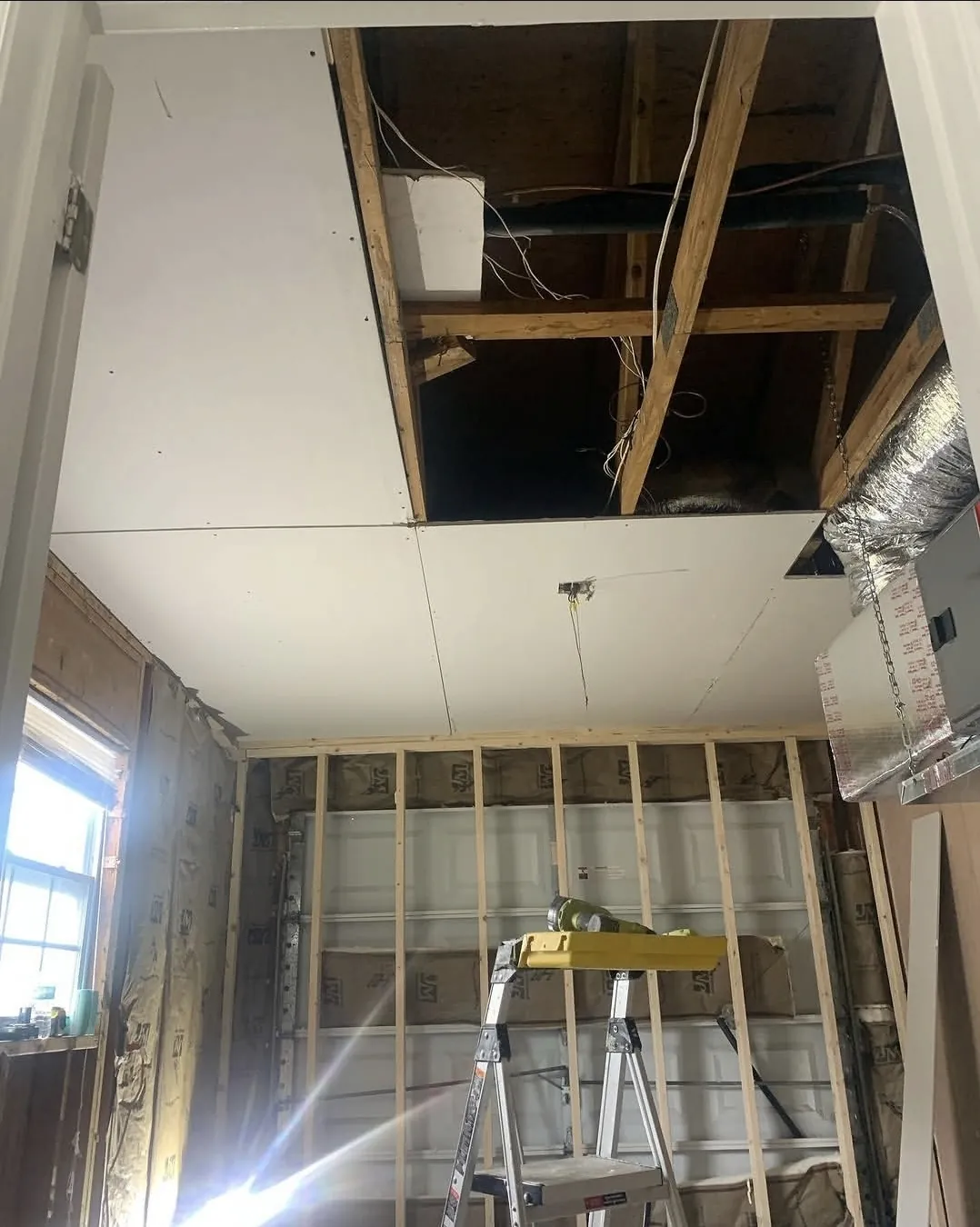
Signs the drywall has to be replaced
These come from the CGC/USG Gypsum Construction Handbook, the EPA and the Gypsum Association:
- A soft core. If the board feels soft or crumbles when you press on it, the handbook says to replace it.
- Extensive loose face paper that stays loose after the board is completely dry.
- Swelling or seams that have come apart, per the EPA's water damage table.
- A sagging ceiling. The handbook says to remove the sagged board, or fur the ceiling with resilient channels and add a new layer of board.
- Heavy mold growth. The handbook says to remove and dispose of boards with excessive mold.
- Floodwater or sewage. The Gypsum Association says drywall exposed to either must be replaced.
Before cutting out wet drywall in an older home, note the EPA's flood cleanup guide warning: disturbing it can release asbestos and lead dust, so take care or bring in someone qualified.
What a skim coat fixes, and what it can't
A skim coat is a thin coat of joint compound troweled over the whole surface. The Gypsum Association's finish standard calls it essentially a film. It hides small flaws, evens out paper texture and makes the wall take paint evenly. That's why it's a good finish once a repaired wall is sound but the surface still looks uneven, though the Gypsum Association notes joints may still show faintly afterward.
What it can't do is fix the board underneath. The CGC/USG handbook says leveling a surface with joint compound will not correct problems caused by poor framing, unusual loads or recurring high moisture. Skimming over soft or swollen drywall hides the damage without fixing it. And for mold, the EPA is direct: do not paint or caulk moldy surfaces.
Sagging ceilings after a roof or AC leak
On a ceiling, water from a roof or AC leak can sit on top of the board instead of running off. The CGC/USG handbook says ceiling sag usually happens in high humidity, and that water-based spray textures can wet the face paper and weaken the gypsum core. Its fix is to remove the sagged board, or to fur the ceiling with resilient channels and hang a new layer of board. Leveling with joint compound won't correct recurring moisture problems, so a skim coat won't fix a sag. The CDC also lists a sagging ceiling as a hazard to check for before going into a water-damaged home, so keep people out from under it until someone qualified has checked it.

Water stains and mold: what you can paint over
Water stains bleed through ordinary paint. Stain-blocking primers are made for this: Benjamin Moore's Fresh Start primer and KILZ Upshot both list water stains among the stains they block or suppress. Benjamin Moore says the surface must be clean and dry, and KILZ says it must be clean and free of mold and mildew. Either way, fix the leak and let the ceiling dry completely before priming.
Mold is different. The EPA's mold cleanup guide says plainly: do not paint or caulk moldy surfaces, because paint over mold is likely to peel. The CDC adds that painting over mold won't stop it from growing.
The EPA says most homeowners can clean up an area smaller than about 10 square feet themselves, but to call a professional if the water was sewage or otherwise contaminated. The Florida Department of Health doesn't recommend mold testing: if you can see mold, testing usually isn't needed, and the mold should be cleaned up and removed.
South Florida humidity slows the repair
Ready-mix joint compound dries by evaporation, and humidity slows it down. National Gypsum's high-humidity guide says drying times increase significantly as relative humidity rises. Each coat needs to dry before the next one and before paint, so a skim coat can take longer on humid summer days.
Keeping the house dry also helps keep mold away: the EPA says to keep indoor humidity below 60 percent, ideally 30 to 50, and the Florida Department of Health says below 50 percent is best for controlling mold and dust mites.
What it costs with us
Once the leak is fixed and the area is dry, here's where our prices start:
- Skim coating starts in the $400 to $800 range.
- Small drywall repairs start in the $250 to $500 range.
- Replacing a section of drywall starts at $350.
The final price depends on how big the damaged area is, whether texture needs matching and whether painting is included. Every estimate is free and in writing. More on our drywall repair and skim coating pages, and if the stain is on stucco outside, our guide to stains on stucco covers that.
Not sure whether to patch or replace?
We'll look at the wall or ceiling, tell you whether it looks patchable or needs a section replaced, and put the price in writing. Request your free estimate.
Get a Free Estimate 💬 WhatsApp Us